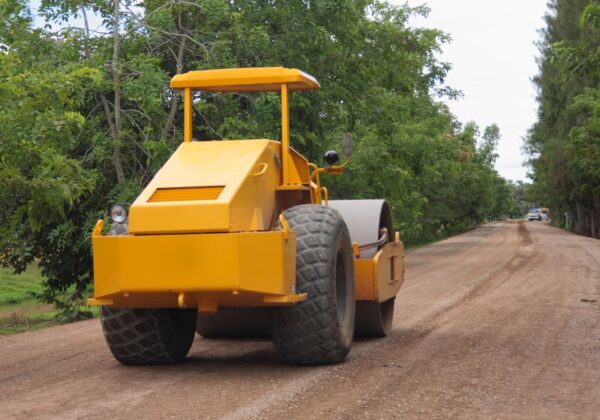
Low-Volume Road Design: Engineering Principles for Cost-Effective Rural Infrastructure
Introduction Low-volume roads serve the majority of the world’s population and carry a disproportionate share of the world’s social and economic value. A road...
Introduction The infrastructure sector faces a defining challenge: the world needs more roads, bridges, water systems, and buildings — yet building them using conventional...
In enzyme-based road stabilization, the clay fraction of a soil is not a contaminant to be tolerated — it is the working surface on...
Introduction Rural road networks are the lifelines of agricultural economies, connecting farms to markets, communities to services, and remote regions to the broader transportation...
Introduction A rural road is never only a road. For the communities it serves, it is the difference between a harvest that reaches the...
Strength from the Ground Up: The Dynamic Cone Penetrometer in Road Testing A compact, hammer-driven instrument that delivers rapid, reliable in-situ measurement of base...
Why proper roadside drainage is the unsung foundation of safe, durable rural infrastructure , and what happens when it fails. 70% of rural road...
Introduction Across the world, an estimated 3.4 million kilometers of rural roads remain unpaved. These roads form the backbone of rural economies, connecting farms...
RURAL POPULATION According to the World Bank, the rural population in developing countries accounts for about 45% of the total population. In 2020, it...